
For more information about RENE Spa’s osteopathic therapy and menu, please see our dedicated Osteopathic Therapy page. Click the banner below to visit RENE Spa’s dedicated Osteopathic Therapy page.
What Is Osteopathy? A Clear Guide to Its Characteristics, History,
and Main Techniques
Osteopathy is an approach proposed in 1874 by American physician A.T. Still and has a history of more than 150 years.
The World Health Organization (WHO) has published standards for osteopathic education and training to help ensure the safety of osteopathy and the quality of its education. However, qualification systems and its position within healthcare vary by country.
In the United States, a DO (Doctor of Osteopathic Medicine) is a licensed physician. This differs from osteopathy as a form of manual therapy practiced in Japan, Thailand, and other countries in terms of qualification systems and scope of practice. RENE Spa is not a medical institution and provides body care that incorporates osteopathic concepts and techniques.
This page introduces the history, effects, and details of osteopathic therapy.
History of Osteopathy
Osteopathy was founded in 1874 by American physician Dr. Andrew Taylor Still in Missouri, USA.
The word “osteopathy” comes from the Greek words OSTEON (bone) and PATHOS (disease, suffering). In Japan, osteopathy was also once referred to as seikotsu therapy.
Osteopathy was introduced to Japan from the United States during the Taisho era, along with chiropractic (spinal manipulation therapy) and spondylotherapy (spinal reflex therapy), and had a significant influence on Japanese manual therapy techniques such as shiatsu and seitai.
★ A New Approach Born from Questions About Medical Care
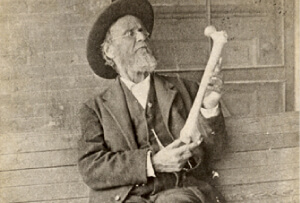
Dr. Andrew Taylor Still, the founder of osteopathy, lost three of his own children to an epidemic after becoming a physician.
As a doctor, he went through the devastating experience of being unable to save his own children.
This experience led him to question the medicine he had studied: why some people with the same illness recovered while others did not, why wealth did not necessarily determine who recovered, and why some people could not be helped even when given adequate medical care and nutrition….
He began to wonder whether something important was being overlooked….
Still was born in the United States in 1828, studied medicine under his father, and worked as a physician.
However, in 1864, he lost three of his children in succession to meningitis, which was prevalent at the time. The experience of being unable to save his beloved family members despite being a physician led Still to develop serious doubts about the medical care of that time.
“Rather than looking only at symptoms and the names of diseases, shouldn’t we seek to understand the human body as a whole?”
With this idea in mind, Still began to re-examine the relationship between the body’s structure and function.
An Anatomical View of the Body
From an early age, Still had many opportunities to interact with nature and animals and developed a strong interest in the structure of bones, muscles, organs, and other parts of the body.
Even after becoming a physician, he continued his study of anatomy and came to believe that the skeleton, muscles, nerves, blood vessels, and other structures do not function independently, but support the body through their relationships with one another.
He also believed that when movement becomes restricted or tension develops in one part of the body, the burden may spread to other parts. Based on this idea, he developed methods for examining the body’s structure and movement by hand.
Based on this research, Still emphasized the following ideas:
- The body functions as a unified whole.
- The body’s structure and function are interrelated.
- The body has an inherent ability to maintain health.
- It is important to consider not only the condition of the body, but also the person’s living environment and the person as a whole.
These ideas have also been carried forward into modern osteopathy.
Osteopathy Spread Despite Opposition
Still’s ideas were new for their time and faced strong opposition from physicians and medical associations around him.
Even so, Still continued his research and practice, working from Kirksville, Missouri. Gradually, people who wanted to learn his ideas and techniques began to gather, creating a need to train students.
In 1892, Still founded the American School of Osteopathy in Kirksville. The first graduating class consisted of 21 students—5 women and 16 men. The school later developed into what is now A.T. Still University. Historical materials from A.T. Still University
Osteopathy in the United States Today
In the United States today, physicians who have studied osteopathic medicine are known as DOs (Doctors of Osteopathic Medicine).
DOs in the United States are physicians who have completed medical school education and clinical training. Like other physicians, they can provide medical examinations, perform tests, prescribe medications, and perform surgery. They work in a wide range of fields, including family medicine, internal medicine, surgery, pediatrics, obstetrics and gynecology, and emergency medicine.
However, DOs in the United States and osteopathy practiced as a form of manual therapy in countries such as Japan and Thailand differ in their qualification systems and scope of practice.
Osteopathy Around the World
Osteopathy spread from the United States to Europe, Australia, and other regions, and is now practiced in many countries.
In some countries, such as the United Kingdom, osteopaths are registered and regulated by law, although qualification systems and their position within healthcare vary from country to country.
Osteopathic ideas were also introduced to Japan in the early 20th century and, together with chiropractic and other approaches, are said to have influenced the development of Japanese bodywork and manual therapies. However, in Japan, an “osteopath” is not a nationally licensed qualification such as a physician or physical therapist.
Principles That Osteopathy Continues to Value Today
Lorem ipsum dolor sit amet, consectetur adipiscing elit. Ut elit tellus, luctus nec ullamcorper mattis, pulvinar dapibus leo.
Osteopathy does not focus only on the area where pain or discomfort is felt, but places importance on considering the connections throughout the whole body.
For example, even when there is a feeling of strain in the shoulder, the condition of the neck, back, shoulder blades, pelvis, posture, breathing, and other areas may also be involved.
For this reason, a characteristic of osteopathy is that it does not work only on one part of the body, but considers an approach suited to the individual while checking the condition of the whole body.
At RENE Spa, we incorporate this osteopathic way of thinking and provide body care suited to each client’s condition while checking the muscles, fascia, joints, posture, breathing, and other factors.
※ Treatments provided at RENE Spa are not medical procedures intended to diagnose or treat disease. If you have severe pain or numbness, sudden muscle weakness, fever, or other concerning symptoms, please consult a medical institution before receiving treatment.
Osteopathy Includes a Variety of Techniques
Osteopathic concepts and techniques have spread to countries around the world. In Japan as well, medical professionals such as physicians and physical therapists, as well as practitioners who study the structure and movement of the body, receive specialized training and incorporate these techniques into their practice.
When people hear the word “osteopathy,” some may imagine techniques that involve forcefully moving the bones. In reality, however, there is no single fixed method. A variety of techniques may be selected according to the condition of the muscles, fascia, joints, ligaments, and other structures.
Some techniques involve gentle touch or having the client apply light force themselves, while others apply quick, small movements to the joints. Therefore, not all osteopathic techniques are “gentle treatments.”
At RENE Spa, we do not provide treatments intended to forcefully twist the bones or make the joints crack. We place importance on checking each client’s physical condition and how they respond to stimulation, and selecting techniques that do not place undue strain on the body.
Main Techniques Used in Osteopathy
Osteopathy includes the following techniques.
MET (Muscle Energy Technique)
This method involves having the client apply light force and using that force to work on muscle tension and joint movement.
Myofascial Release
This technique involves checking muscle and fascial tension and areas that are difficult to move, then slowly working on them with force adjusted to the condition.
SCS (Strain-Counterstrain)
This technique involves finding a position in which the body feels comfortable and maintaining that position for a certain period of time, with the aim of making it easier for excessively tense muscles and other tissues to relax.
FPR (Facilitated Positional Release)
This method involves moving the body into a position that reduces strain on the muscles and joints, then applying light pressure or movement.
Still Technique
This technique involves guiding the body in a direction that is easier to move, then moving the joint while adjusting the pressure.
Ligamentous Tension Balance / Ligamentous Articular Strain
This technique involves manually checking the tension of ligaments and tissues around a joint, with the aim of restoring balance in a position that places less strain on them.
Cranial Osteopathy
This technique uses an extremely light touch around the head, spine, sacrum, and other areas, with the aim of calming tension in the body and making it easier to relax.
Approach to the Abdomen and Around the Internal Organs
This method involves gently touching the abdomen and checking the tension of the fascia and tissues around the abdomen, as well as movement associated with breathing. It is not intended to diagnose or treat diseases of the internal organs or to return organs to their original positions.
Lymphatic Techniques
These techniques apply gentle stimulation to the skin and subcutaneous tissues to support relaxation and conditioning for those who experience swelling or a feeling of heaviness in the body.
HVLA (High-Velocity, Low-Amplitude Technique)
This technique applies a small, quick movement to a joint. A joint sound may occur during the technique.
※ HVLA is one of the techniques used in osteopathy, but at RENE Spa, we do not perform treatments with the aim of making joints crack.
Osteopathic Therapy at RENE Spa Bangkok
At RENE Spa Bangkok, we incorporate osteopathic concepts and techniques into various forms of body care, based on knowledge of physical therapy, anatomy, kinesiology, and related fields.
Rather than looking only at areas where pain or stiffness is felt, we check posture, joint movement, muscle and fascial tension, left-right differences in the body, breathing, and other factors. Based on this, we combine techniques according to each individual’s condition.
The main treatments offered as standalone menu options at RENE Spa are as follows.
Cranial Osteopathy
Using an extremely light touch around the head and sacrum, this treatment aims to calm tension in the body and make it easier to enter a state of deep relaxation.
Learn More About Cranial Osteopathy
Visceral Approach
We check the tension of the fascia and tissues around the abdomen and movement associated with breathing, and gently work on these areas within a comfortable range.
Learn More About the Visceral Approach
Muscle-Activation Lymphatic Massage
By combining techniques for the muscles and fascia with lymphatic massage, this treatment supports conditioning for those concerned about swelling, heaviness in the body, fatigue, and other issues.
Learn More About Muscle-Activation Lymphatic Massage
※ Treatment methods and how they feel vary from person to person. Treatments provided at RENE Spa are not medical procedures intended to diagnose or treat disease. If you are currently receiving medical care, are pregnant, have recently undergone surgery, or have a medical condition, please be sure to inform us when making your appointment.
📍 At RENE Spa, we combine the following approaches and techniques according to the condition of the body:
- Approaches to the muscles and fascia
- Techniques for checking joint movement
- Muscle Energy Technique
- Strain-Counterstrain
- Cranial Osteopathy
- Gentle approaches to the abdominal area
- Lymphatic massage
- Body adjustment that takes breathing and posture into consideration
※ The techniques used vary depending on the client’s condition and the course selected. Not all techniques are performed in a single session.
Lorem ipsum dolor sit amet, consectetur adipiscing elit. Ut elit tellus, luctus nec ullamcorper mattis, pulvinar dapibus leo.
Lorem ipsum dolor sit amet, consectetur adipiscing elit. Ut elit tellus, luctus nec ullamcorper mattis, pulvinar dapibus leo.